
Birth injuries affect thousands of American families every year, creating life-changing medical, emotional, and financial challenges. Understanding the current data on birth injury rates, causes, and outcomes is crucial for expectant parents, medical professionals, and healthcare policymakers working to improve maternal and infant safety.
This comprehensive analysis examines the latest national statistics on birth injuries, revealing both concerning trends and encouraging progress in prevention efforts across the United States.
Birth Injury Statistics 2025 (Key Facts)
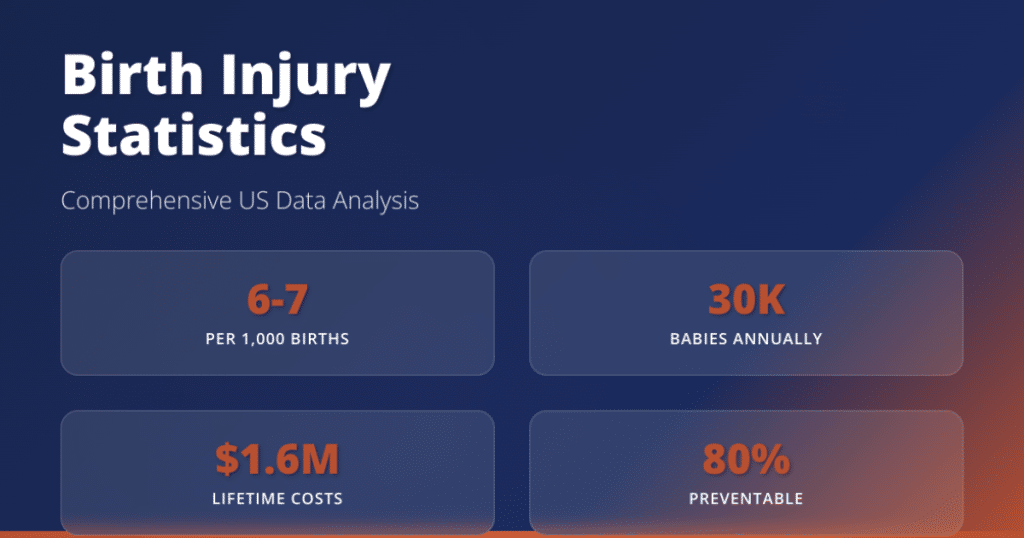
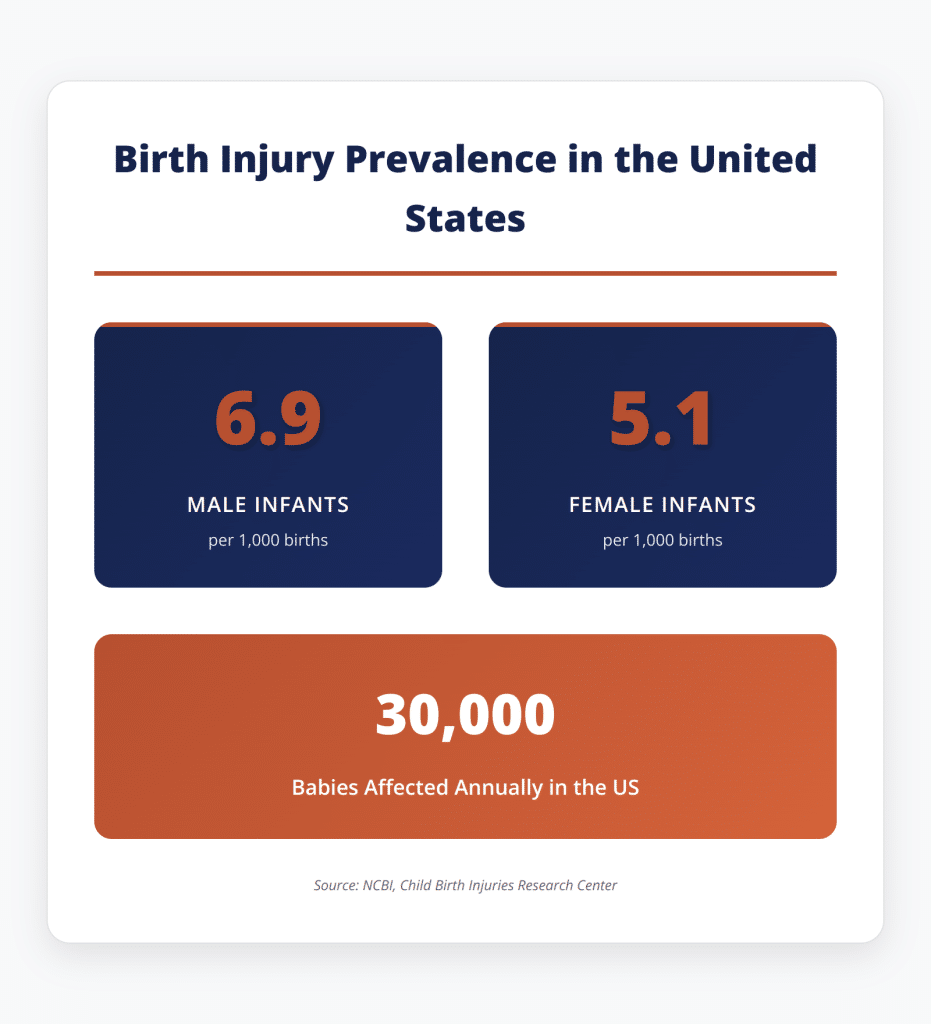
- Birth injuries occur in 6-7 per 1,000 live births (NCBI), affecting approximately 30,000 babies annually in the US
- Birth injuries are the 4th leading cause of infant mortality (Cerebral Palsy Guide), contributing to 20% of all infant deaths
- Over 80% of birth injuries are moderate to severe (Birth Injury Guide), requiring long-term medical care and intervention
- Male infants have 35% higher birth injury rates than females (6.9 vs 5.1 per 1,000 births) (Child Birth Injuries)
- Birth injury rates have declined 27% over the past two decades (Miller & Zois) due to improved medical techniques
- Average lifetime costs reach $1.6 million for conditions like cerebral palsy (Cerebral Palsy Foundation)
- Birth injury malpractice settlements average over $1 million (Child Birth Injuries Legal Statistics), with 95% of cases settling out of court
- Approximately 80% of birth injuries are preventable (Cerebral Palsy Guide) with proper medical care and monitoring
How Common Are Birth Injuries in the United States?
Birth injuries represent a significant public health concern affecting tens of thousands of American families annually. Current national surveillance data provides critical insights into the scope and trends of this issue.
National Birth Injury Rates
Current national statistics show birth injuries affecting 6.6-7.0 per 1,000 live births annually (NCBI), translating to approximately 29,000-30,000 affected babies each year. This means roughly 3 babies are born with birth injuries every hour nationwide, or 500 cases per week across all US hospitals and birthing centers.
The male infant rate of 6.9 per 1,000 births significantly exceeds the female rate of 5.1 per 1,000 (Child Birth Injuries), primarily due to larger average birth weight and size complications during delivery. This 35% higher rate among males has remained consistent across multiple years of data collection.
Birth injuries account for 20% of all infant deaths in the United States (Cerebral Palsy Guide), making them the fourth leading cause of infant mortality. Approximately 135 babies die per 100,000 deliveries as a direct result of birth trauma, contributing to roughly 4,000 infant deaths annually from complications related to delivery injuries.
Birth Injury Trends Over Time
The trend data provides encouraging news for expectant families. Birth trauma rates declined from 2.6 per 1,000 births in 2004 to 1.9 per 1,000 births in 2012 (Miller & Zois), representing a 27% decrease over eight years. This improvement stems from refinements in obstetrical techniques, increased cesarean delivery rates for high-risk cases, and reduced use of instrumental deliveries involving forceps and vacuum extraction.
Geographic disparities create significant challenges for certain populations. Rural areas experience 33% higher birth injury rates compared to large metropolitan areas (NCH Stats), with rates increasing progressively from urban to rural settings. The Northeast United States demonstrates 24-32% higher birth injury rates than the West, South, and Midwest regions, suggesting significant regional variations in care quality and access.
What Are The Most Common Types of Birth Injuries?
Birth injuries encompass a wide range of conditions affecting different body systems, from temporary bruising to permanent neurological damage. Understanding the prevalence and outcomes of specific injury types helps families and medical providers prepare for potential complications.
Cerebral Palsy Statistics
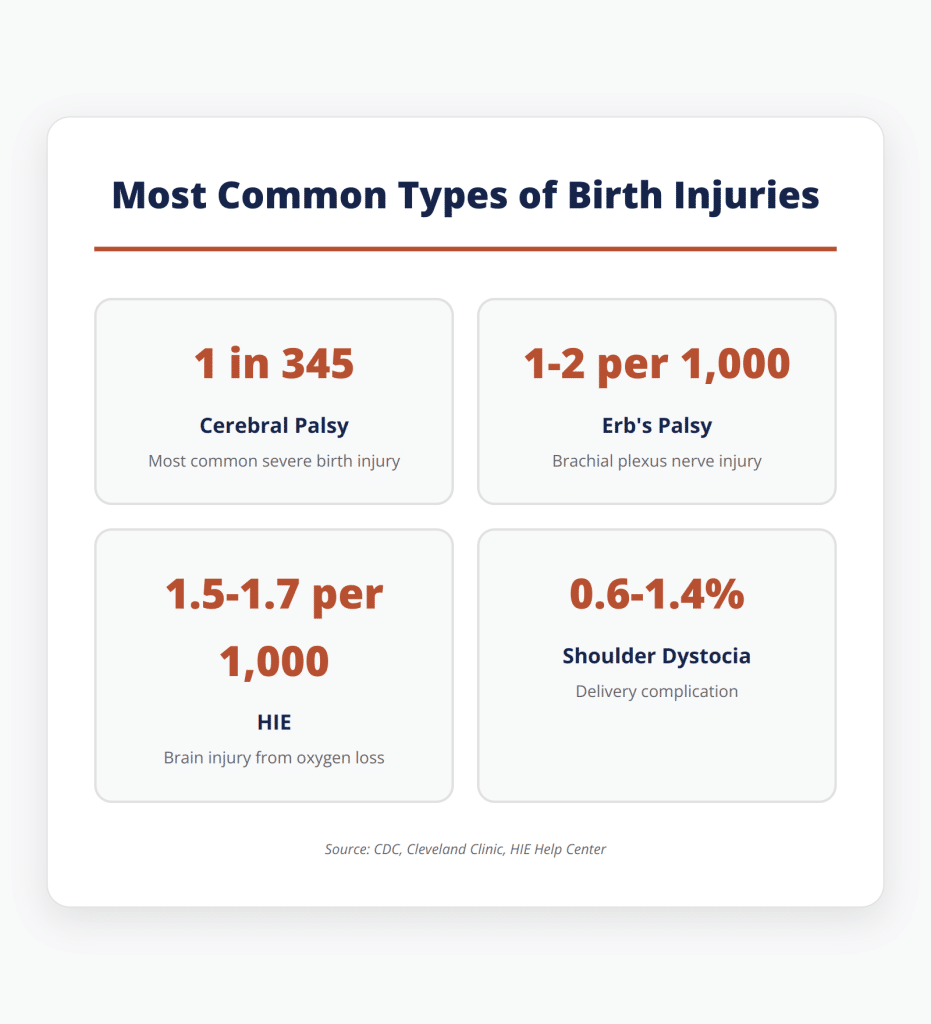
Cerebral palsy represents the most common severe birth injury with long-lasting implications, affecting approximately 2.9-3.6 per 1,000 live births in the United States. The Centers for Disease Control and Prevention reports cerebral palsy affects approximately 1 in 345 children (CDC), with 8,000-10,000 new diagnoses annually.
The current U.S. population includes approximately 764,000 people living with cerebral palsy (Cerebral Palsy Guidance), with 500,000 under age 18. Among affected children, 58% walk independently, 11% require walking aids, and 31% use wheelchairs (Birth Injury Help Center) for mobility. The condition frequently presents with co-occurring complications: 40% have intellectual disabilities, 35% experience epilepsy, and 15% have vision impairments.
Birth-related causes account for 80-90% of cerebral palsy cases (Child Birth Injuries), with hypoxic-ischemic encephalopathy (HIE) contributing to approximately 20% of diagnoses. Low birth weight dramatically increases risk (Law Firm), with babies under 3 pounds experiencing rates of 59.5 per 1,000 births compared to 6.2 per 1,000 for babies weighing 3-5 pounds.
Brachial Plexus and Erb’s Palsy Rates
Brachial plexus injuries, including Erb’s palsy, affect 0.9-2.6 per 1,000 live births annually (NCBI), representing approximately 12,000 cases nationwide. Erb’s palsy specifically occurs in 1-2 per 1,000 births (Cleveland Clinic), constituting 50-60% of all brachial plexus injuries and representing the most common type.
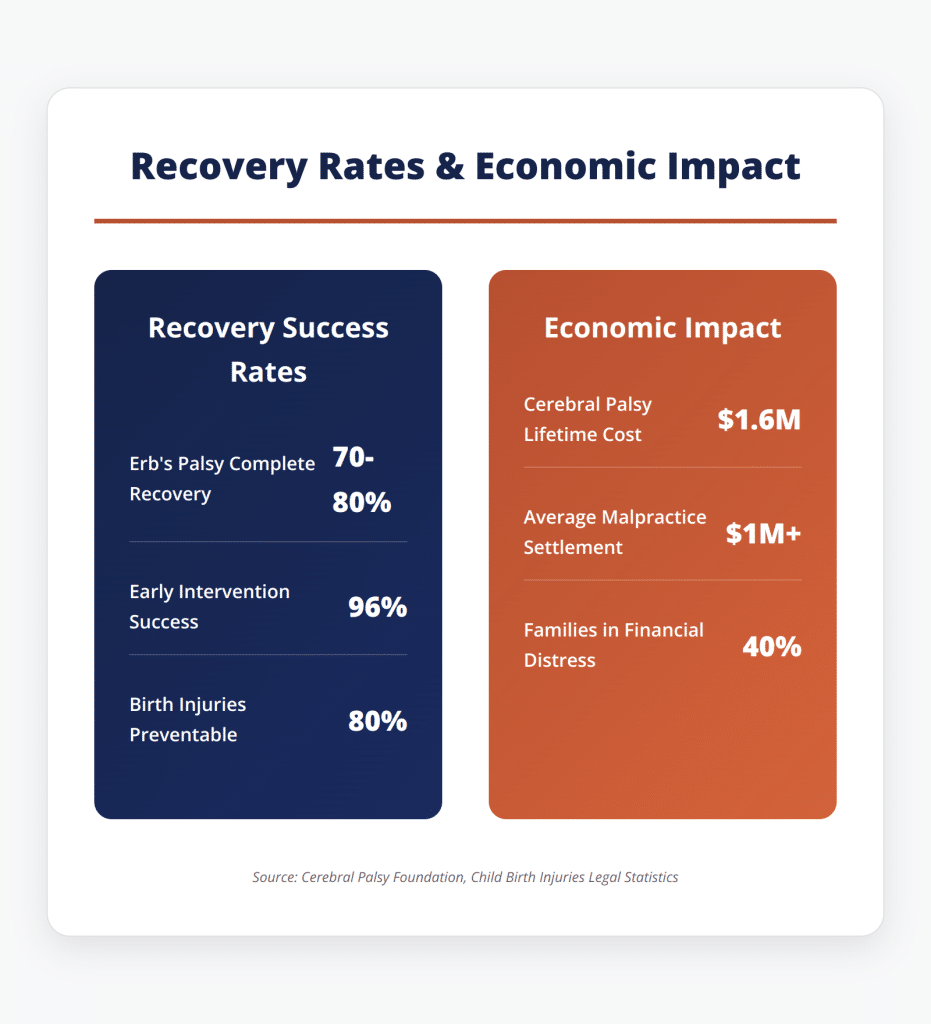
Recovery statistics provide encouraging news for most families. Complete recovery occurs in 70-80% of cases within the first year (Child Birth Injuries Erb’s Palsy), with treatment success rates reaching up to 96% when intervention begins early. Most significant improvement happens within the first two years, though 10-20% of cases require surgical intervention for optimal outcomes (HSS).
Shoulder dystocia increases Erb’s palsy risk 6-fold (Child Birth Injuries), while macrosomia (large baby size) creates 5-fold increased odds. Instrumental deliveries using forceps or vacuum extraction significantly elevate risk, particularly when excessive traction occurs during delivery.
Brain Injuries and HIE in Newborns
Hypoxic-ischemic encephalopathy (HIE) affects 1.5-1.7 per 1,000 live births in developed countries like the United States (HIE Help Center). HIE represents the fifth leading cause of death in children under 5 years globally, highlighting its severity and impact.
Mortality rates among HIE cases reach 4.6% overall (NIH PMC), though outcomes vary dramatically by severity level. Severe HIE carries particularly grave implications, with 75% of cases resulting in severe handicap or early death (Nature Scientific Reports). Therapeutic hypothermia, used in approximately 6.7% of HIE cases, has contributed to declining mortality rates in recent years.
Long-term developmental challenges affect significant proportions of survivors. Among HIE patients, 7.5% develop cerebral palsy, 11.8% experience delayed development, 3.0% suffer hearing loss, and 1.2% develop chronic seizures (UF Health). However, 25% of HIE survivors develop significant long-term disabilities including cerebral palsy and cognitive impairment, requiring ongoing medical care and support services.
Shoulder Dystocia Occurrence Rates
Shoulder dystocia occurs in 0.6-1.4% of all births (Cleveland Clinic), with rates varying significantly based on infant birth weight and maternal risk factors. For babies weighing 5.8-8.8 pounds, rates range from 0.6-1.4%, while babies exceeding 8.8 pounds experience rates of 5-9% (Wiley Online Library).
Previous shoulder dystocia creates 7-12% recurrence risk in subsequent vaginal deliveries (NCBI PMC), with brachial plexus injury rates increasing from 19 per 1,000 first occurrences to 45 per 1,000 with recurrence. Maternal diabetes significantly elevates risk, affecting 1.9% of diabetic pregnancies compared to 0.6% in non-diabetic pregnancies.
Complications affect both mothers and infants during shoulder dystocia episodes. Fetal injury occurs in 17-25% of cases (ScienceDirect), primarily involving brachial plexus injuries, bone fractures, and neurological complications.
Who Is Most At Risk for Birth Injuries?
Understanding risk factors helps identify pregnancies requiring enhanced monitoring and preparation for potential complications during delivery.
Birth Injury Risk Factors
Maternal age extremes create the highest risk (Goldberg Law), with mothers aged 20 years and younger experiencing odds ratios of 16.0, while mothers aged 30 and older face odds ratios of 2.5 compared to optimal age ranges.
Birth weight statistics reveal critical risk thresholds. Low birth weight babies (under 2,500g) represent 8% of births but face elevated complication risks (Cerebral Palsy Guide), while high birth weight babies (over 4,000g) also comprise 8% of births with injury rates reaching 7.7% when exceeding 4,500g. Macrosomia creates odds ratios of 6.6 for birth injuries compared to average-weight infants.
Delivery method significantly influences injury risk. Forceps delivery creates odds ratios of 9.4 for birth trauma, while vacuum extraction results in 59 injuries per 10,000 assisted deliveries compared to 4 per 10,000 spontaneous deliveries (PubMed). Instrumental deliveries overall show 30% higher injury rates than non-assisted births.
Demographic Patterns
Racial and ethnic disparities show complex patterns requiring careful analysis. Black infants demonstrate 18% higher preterm birth rates (10.0% vs 8.5%) and 48% higher low birth weight rates (10.2% vs 6.9%) compared to white infants (NIH PMC). These disparities contribute to differential birth injury risks, though direct birth injury rates show variable patterns by specific injury type and geographic location.
Labor complications compound risk factors substantially. Prolonged labor affects 8% of women and increases nerve and muscle damage risk (NCBI), while cephalopelvic disproportion and non-cephalic presentation both create odds ratios of 8.3 for birth injuries. First-time pregnancies demonstrate odds ratios of 4.0 for birth trauma compared to subsequent pregnancies.
How Much Do Birth Injuries Cost?
The economic impact of birth injuries creates substantial financial burdens for families and the healthcare system nationwide, with costs often extending throughout the affected child’s lifetime.
Lifetime Medical Costs
Cerebral palsy alone generates average lifetime costs of $921,000 per individual (approximately $1.6 million in 2025 dollars) (Cerebral Palsy Foundation), with cost breakdowns showing 80.6% indirect costs, 10.2% direct medical expenses, and 9.2% direct non-medical costs.
Healthcare system costs reach billions annually when considering all birth injury types. National spending for cerebral palsy totals approximately $4.1 billion in lifetime costs for recent birth cohorts (Law Firm), with additional annual spending of $9.2 billion for early mortality and work inability related to cerebral palsy.
The broader economic burden extends beyond direct medical costs. The US Department of Agriculture estimates $240,000 to raise a typical child to age 18, while children with special needs require approximately $1 million (Child Birth Injuries). Costs vary by condition severity, ranging from $1.4 million for autism spectrum disorders to $2.3 million for severe intellectual disabilities.
Family Financial Impact
Family financial impact proves devastating for many households. Approximately 40% of families with special healthcare needs children experience significant financial difficulties (Child Birth Injuries Financial Support), often requiring second mortgages, high-interest loans, or early retirement account withdrawals. Children with birth injuries generate medical costs 10 times higher than unaffected children, with out-of-pocket expenses not captured in standard cost calculations.
Rehabilitation expenses include hundreds of dollars per physical therapy session with multiple weekly sessions required (Nurenberg Paris), plus ongoing costs for speech therapy, occupational therapy, medical equipment, wheelchairs, assistive devices, and home modifications. These cumulative costs often exceed insurance coverage limits, requiring families to access Medicaid and other public support programs for comprehensive long-term care.
How Many Birth Injury Lawsuits Are There?
Medical malpractice litigation represents a significant aspect of birth injury outcomes, reflecting both the severity of injuries and questions about preventability.
Birth Injury Malpractice Statistics
Medical malpractice statistics reveal birth injuries represent approximately 25% of all obstetrics and gynecology malpractice claims, occurring in roughly 1 in 9,714 births (Birth Injury Guide). The 2023 National Practitioner Data Bank recorded 11,440 total medical malpractice claims with $4.8 billion in settlements (HRSA), averaging approximately $420,000 per claim across all medical specialties.
Legal outcome patterns show 95% of birth injury lawsuits settle out of court (Child Birth Injuries Legal), avoiding prolonged trial proceedings. Among documented cases, 80% of birth injuries are classified as moderate to severe, with primary causes including poor labor and delivery management (40% of claims), delayed cesarean sections, and improper instrument use during delivery.
Preventability statistics indicate approximately 80% of birth injuries are considered preventable (Cerebral Palsy Guide) with appropriate medical care and monitoring. This finding supports the substantial legal activity in this area, as preventable injuries often form the basis for successful malpractice claims.
Average Settlement Amounts
Birth injury settlements significantly exceed average malpractice payouts. Average birth injury settlements reach $1 million or higher (Lawsuit Information Center), representing 30% higher awards than typical medical malpractice claims. Settlement ranges span from $420,500-$510,000 for out-of-court agreements, though severe cases can reach extraordinary amounts including recent verdicts of $182.7 million (Pennsylvania, 2023) and $120 million (Michigan, 2024).
Recent trends show increasing “mega-verdicts” exceeding $10 million (MEDPLI), with 57 such verdicts recorded in 2023 alone. State-by-state legal variations create different outcomes (Sokolove Law), with statute of limitations periods ranging from 1-5+ years depending on state laws and discovery rules, and special provisions for minors extending deadlines until ages 18-21 in some jurisdictions.
Can Birth Injuries Be Prevented?
Evidence-based prevention strategies have demonstrated remarkable success in reducing birth injury rates nationwide, offering hope for continued improvement in maternal and infant safety.
Prevention Success Rates
Evidence-based prevention strategies have demonstrated remarkable success. Birth trauma rates declined 27% from 2.6 per 1,000 births in 2004 to 1.9 per 1,000 births in 2012 (Miller & Zois), primarily through improved obstetrical techniques, increased cesarean delivery rates for high-risk cases, and reduced instrumental delivery use.
Bundle compliance proves critical for optimal outcomes. Hospitals achieving 95% compliance with standardized care bundles saw birth trauma rates fall from 0.2% to 0.03% (NCBI), representing an 85% reduction through systematic quality improvement. Key bundle elements include enhanced fetal monitoring, standardized communication protocols, and emergency response procedures.
Simulation training for emergency scenarios enhances team performance and communication (Modern Healthcare), while interprofessional teamwork involving obstetricians, neonatologists, pediatricians, and specialized nurses improves coordination during complex deliveries. The implementation of SBAR communication protocols (Situation, Background, Assessment, Recommendation) has standardized information transfer during critical moments.
Hospital Quality Improvement Results
Hospital quality improvement initiatives show impressive results across multiple systems. Fairview Health Services achieved an 11% decrease in maternal and neonatal adverse outcomes between 2008-2011 (NIH PMC), generating cost savings of $284,985 with minimal net system costs. The Premier Perinatal Safety Initiative demonstrated even more dramatic improvements, with participating hospitals achieving 5.4% to 25% reductions in birth injuries (PubMed).
International success stories provide additional evidence for prevention effectiveness. The AIM Malawi Program achieved an 82.1% relative decrease in maternal mortality from obstetric hemorrhage (PubMed), with significant improvements in hospital safety culture scores and increased use of evidence-based interventions. These results demonstrate that systematic quality improvement approaches can succeed across diverse healthcare settings.
Technology integration offers promising advances for future prevention efforts. Wireless fetal monitoring devices provide more reliable data while eliminating restrictive wires, while artificial intelligence and machine learning algorithms are being developed to identify risk patterns and predict adverse outcomes before they occur.
What Are The Long-Term Effects of Birth Injuries?
Long-term outcomes for birth injury survivors vary significantly depending on injury type and severity, though early intervention consistently improves prognosis across all conditions.
Recovery Statistics
Treatment success rates for brachial plexus injuries reach nearly 100% when intervention begins within one month (Medscape), while delayed treatment results in permanent complications for 20-30% of cases. Physical therapy leads to significant improvement in 95% of brachial plexus cases (NIH PMC), with occupational therapy and specialized exercises preventing permanent disability.
For cerebral palsy patients, physical therapy can increase mobility by up to 13%, while dorsal rhizotomy surgery shows significant improvement in up to 70% of appropriate candidates. Complete recovery occurs in 70-80% of Erb’s palsy cases within the first year (Child Birth Injuries), with treatment success rates reaching up to 96% when intervention begins early.
Quality of Life Outcomes
Quality of life research provides valuable insights into long-term experiences. Studies of very low birth weight children at age 19 showed mean health-related quality of life scores of 0.86 (BioMed Central), with 45% maintaining stable outcomes, 25% improving, and 30% worsening from adolescence to young adulthood.
Educational and developmental impacts create lasting challenges for many families. Children with birth injuries face greater risk for ADD, ADHD, dyslexia, aphasia, and dyscalculia (Fronzuto Law), with oxygen deprivation during birth strongly linked to cognitive disabilities. Individual Education Programs (IEPs) become necessary for many children, requiring specialized teaching accommodations and ongoing support services.
Family support needs extend far beyond medical treatment. Financial burden affects approximately 40% of families with special healthcare needs children (Child Birth Injuries), while emotional impacts include parental guilt, stress, and helplessness alongside childhood frustration, low self-esteem, and social isolation.
Research indicates approximately 30,000 women annually develop PTSD from traumatic births (Davis Levin), highlighting the importance of comprehensive family support that addresses both child and maternal needs. Early intervention programs prove most effective when implemented promptly, with evidence showing better outcomes for children receiving services within the first three years of life.
The financial reality of long-term care proves challenging for most families. Rehabilitation expenses include hundreds of dollars per physical therapy session with multiple weekly sessions required (The Beasley Firm), plus ongoing costs for speech therapy, occupational therapy, medical equipment, wheelchairs, assistive devices, and home modifications. These cumulative costs often exceed insurance coverage limits, requiring families to access Medicaid and other public support programs for comprehensive long-term care.
Frequently Asked Questions
How common are birth injuries in the United States? Birth injuries occur in approximately 6-7 per 1,000 live births in the US (NCBI), affecting about 30,000 babies annually. This represents roughly 3 babies born with injuries every hour nationwide.
What is the most common type of birth injury? Cerebral palsy is the most common severe birth injury, affecting 1 in 345 children (CDC) (2.9-3.6 per 1,000 births). Among nerve injuries, Erb’s palsy is most common, occurring in 1-2 per 1,000 births (Cleveland Clinic).
Are birth injuries preventable? Approximately 80% of birth injuries are considered preventable (Cerebral Palsy Guide) with appropriate medical care and monitoring. Hospitals using standardized care protocols have achieved up to 85% reductions in birth trauma rates (NCBI).
How much do birth injuries cost families? Lifetime costs vary significantly by condition severity. Cerebral palsy averages $1.6 million in lifetime costs (Cerebral Palsy Foundation) (2025 dollars), while typical special needs children require approximately $1 million compared to $240,000 for unaffected children (Child Birth Injuries).
What are the chances of recovery from birth injuries? Recovery rates depend on injury type and severity. Brachial plexus injuries show 70-80% complete recovery within one year (Child Birth Injuries), with up to 96% success when early intervention begins. More severe brain injuries may result in permanent disabilities requiring lifelong care.
Do birth injury rates vary by demographics? Yes, significant variations exist. Male infants have 35% higher rates than females (Child Birth Injuries), rural areas show 33% higher rates than urban areas (NCH Stats), and maternal age extremes (under 20 or over 30) increase risk substantially (Goldberg Law).
How many birth injury lawsuits occur annually? Birth injuries represent approximately 25% of all obstetrics and gynecology malpractice claims (Birth Injury Guide). With roughly 11,440 total medical malpractice claims in 2023 (HRSA), birth injury cases number in the thousands annually, with 95% settling out of court (Child Birth Injuries Legal).