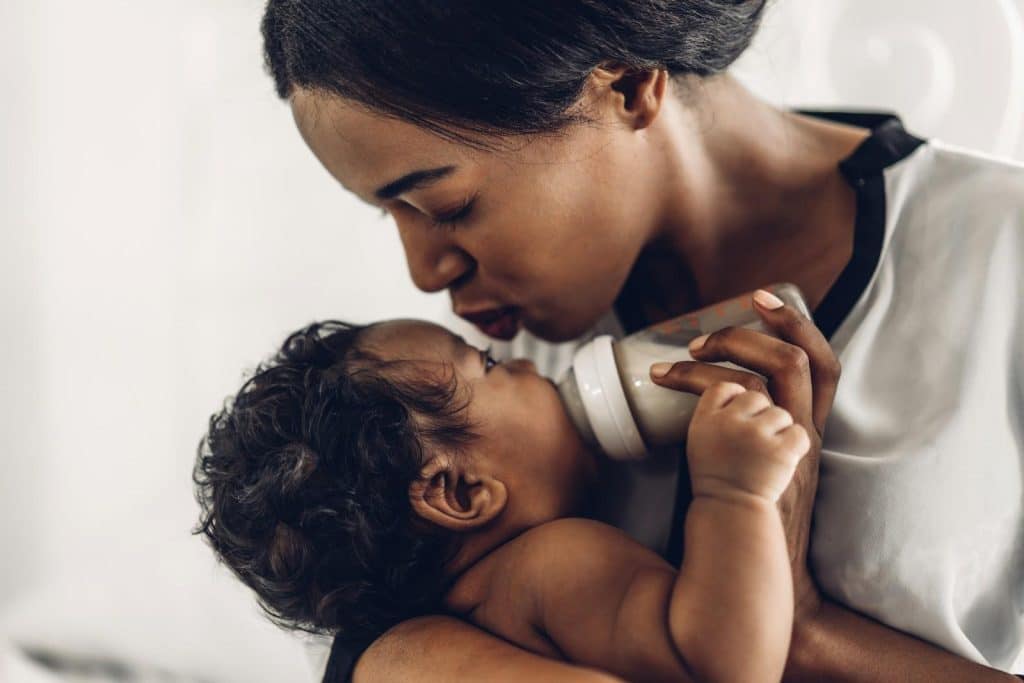
Having a baby is a beautiful moment for many women. However, this can also be a terrifying moment for many women, particularly those who give birth prematurely or have a baby who is at risk for an illness or disease. Many women struggle to breastfeed under the best of circumstances, but when they are stressed and worried about their baby, this struggle becomes even more pronounced. In some of these cases, donor breast milk may be needed to ensure the health of the baby and reduce the mother’s stress. However, many mothers who have New Mexico Medicaid for themselves and their babies may believe that this state-provided insurance will not cover donor milk. This is an inaccurate belief and it is important that women know this. An experienced pediatric medical negligence attorney at Erin Marshall Law may be able to assist you in understanding the coverage you and your baby need. Call (505) 218-9949 to discuss the specifics of your case if you have been told that Medicaid will not pay for the donor milk your baby needs.
What Is Donor Breast Milk and Who Needs It?
Donor breast milk, also referred to as donor human milk (DHM) is human milk donated by a healthy lactating individual. Once donated, the milk is then processed and distributed by demonstrated evidence-based guidelines. Donor milk banks are regulated by both a national clinical organization, the Human Milk Banking Association of North America, and the Food & Drug Administration (FDA). Donor breast milk, like breast milk provided by the mother herself, contains bioactive factors such as immunoglobulins, lysozyme, lactoferrin, human milk oligosaccharides, and other factors that are valuable to protecting the infant against inflammatory disorders and promoting the intestinal and immune development of the infant, according to the National Library of Medicine.
While all babies benefit from human breast milk, premature or low birth weight infants or those with gastrointestinal anomalies or congenital heart disease need it most. Unfortunately, these infants often cannot get a sufficient amount of breast milk from their mothers due to insufficiency or unavailability. Therefore, these infants often need donor breast milk to provide crucial protective antibodies and other factors to promote their healthy growth, support their immature immune system, and reduce the risk of serious complications, such as necrotizing enterocolitis.
Barriers to Donor Breast Milk and Its Use
While the benefits of donor breast milk have been studied and proven, there are still a number of barriers to its use, especially in New Mexico. Some of these barriers prevent people from donating, while others prevent people from accepting donor milk. Some barriers apply to both donating and accepting. Finding ways to reduce or eliminate these barriers is crucial to ensuring that infants receive the donor breast milk they may need.
Donating Barriers
There are many barriers to donating breast milk. Psychological barriers include having negative opinions toward donating or disliking the process. Time requirements may also be a barrier, as the process can take a lot of time. Hospital leadership support and staff training can impact donor breast milk availability by causing people not to donate due to leadership or staff not understanding the process or how to handle donor milk once it has been donated.
Accepting Barriers
Lack of knowledge that donor breast milk even exists, much less where to find safe sources or how to donate, can prevent people from seeking out donor milk. Lack of staff and parent knowledge about the health and safety of donor milk can also cause people to refuse to accept or use it. Family and community barriers, such as family stigmas or cultural or religious taboos, may also lead to families declining to accept much-needed donor milk.
Health system barriers also present significant challenges to families seeking out or accepting donor human milk. A lack of support, information, and standardized guidelines around using donor breast milk, plus the storage and transportation issues that many of the families who most need donor milk, can all cause these families to be unaware of donor milk or to believe that they cannot or should not accept it. Cost and reimbursement are also often significant factors in refusing donor milk. According to the Human Milk Repository of New Mexico, DHM is approximately $4.50 per ounce. This cost is just to cover the processing of the milk, but it is often cost-prohibitive to families without insurance coverage for it. Many families who receive New Mexico Medicaid mistakenly believe that donor breast milk is not covered and thus refuse donor milk.
General Barriers
Some barriers present issues for both those who wish to donate breast milk and those who would use it. One of these barriers is policy-related. Inconsistent policies regarding hygiene requirements and donation costs can cause potential donors to decide it is too difficult or confusing and leave recipients concerned about health and safety. Additionally, public policy tends to vary across the country, with some states allowing Medicaid coverage of donor breast milk and others not allowing it. The states that do allow coverage often have different requirements. This can make it confusing as families who contemplate using donor milk get conflicting information from friends and family who may be in a state with different laws and requirements than their own. Additionally, some individuals who were unable to receive adequate prenatal or postpartum care due to transportation or other issues may feel responsible for their infant’s health issues and believe they should not take donor milk as a result.
New Mexico Medicaid Donor Breast Milk Requirements
New Mexico Medicaid does provide coverage for donor breast milk. However, the state does have requirements that both providers and members must meet. Knowing both the provider requirements and member eligibility requirements is important, as families must make sure they meet the eligibility requirements themselves and that they choose or are directed to a provider that meets New Mexico Medicaid requirements.
Individual Donor Requirements
Individual donors must only meet the requirements of the Human Milk Repository of New Mexico, which is the local milk bank for the state of New Mexico. This includes general and medical screenings, blood work, and physician approval. Once a donor is approved, the Human Milk Repository of New Mexico has donation stations around the state where donors can drop off their donations.
Provider Requirements
Providers who dispense donor breast milk must meet specific requirements outlined in a letter of direction from New Mexico’s Medicaid Director, Dana Flannery. First, they must be enrolled with New Mexico Medicaid as Provider Type 414 (Medical Supply Company) and Specialty 208 (Human Donor Milk Supplier). The provider must also provide the New Mexico Human Services Department, Medical Assistance Division (HSD/MAD) with a copy of their business license, federal tax identification letter, completed W-9 form, and Human Milk Bank Association of America (HMBANA) certification. They must also provide proof of malpractice, medical or professional liability insurance. If the provider is a non-profit organization, they must also provide a company of the Internal Revenue Service (IRS) determination letter.
Member Eligibility
The same letter of direction that outlined the provider requirements also set the member eligibility requirements. The first requirement is that determining eligibility must be based on the information documented in the eligible infant’s medical record. Therefore, careful recordkeeping by hospital staff and other medical providers is crucial to the infant’s approval for donor breast milk that will be covered by New Mexico Medicaid. The infant must be Medicaid eligible, high-risk, and no more than 12 months old. They must also have a documented birthweight of less than 2,500 grams, or a congenital or acquired condition that puts the infant at high risk of developing necrotizing enterocolitis, and/or infection, or have one or more of the following:
- Preterm birth
- Failure to thrive
- Hypoglycemia
- Hyperbilirubinemia
- Abnormal weight loss
- Intrauterine growth restriction
- Documented intolerance to all formulas
Additionally, the mother must be unable to breastfeed due to medical reasons, such as maternal complications at delivery, multiple gestations, medical mother/child separation, adoption, low milk supply, or bridge supply (bridge supply qualifies for 40 ounces per mother’s request). New Mexico Medicaid does not require prior authorization to use donor breast milk. If you believe you have been wrongfully denied donor breast milk by New Mexico Medicaid, an experienced attorney with Erin Marshall Law may be able to review your claim and advise you about your legal options.
How Does New Mexico Medicaid Pay for Donor Breast Milk?
One of the more complex aspects of insurance is the hoops people often feel they must jump through to get services covered. Sometimes a service requires the provider to submit the claim and other times, the patient must submit the claim. Sometimes a service is reimbursed once the patient pays for it and submits proof that the service has been paid for.
Fortunately, New Mexico Medicaid has simplified the process of donor breast milk claims and families do not need to do anything. When providers who meet the requirements for New Mexico Medicaid provide donor breast milk to Medicaid eligible infants within the dates of service July 1, 2024 to an unspecified end date, they will then submit a claim. They will then be reimbursed by Medicaid.
Do I Need a Prescription to Receive Milk?
Should the donor milk recipient need insurance coverage or reimbursement (currently for New Mexico Medicaid and Tricare provide coverage), the family will need to get a prescription from the infant’s doctor stating the infant’s requirements for coverage. In-hospital and recipients paying out of pocket for outpatient milk do not need prescriptions. Milk can be shipped to the family or picked up by the family, depending on what works better for the family. The Human Milk Repository of New Mexico staff typically work with the family to determine any prescription needs and the ideal method for getting the donor milk to the family.
How a Pediatric Medical Negligence Attorney May Be Able to Assist You
For many women, giving birth can be scary by itself. When your baby is premature, underweight, or otherwise not completely healthy, things can be even scarier. Knowing there is an option that may improve your infant’s health that is covered by some insurance can bring relief. If you believe your infant qualifies for donor breast milk covered by New Mexico Medicaid or other insurance but has been denied, contact a pediatric medical negligence attorney with Erin Marshall Law to learn more about your legal options. Call (505) 218-9949 to schedule a consultation and review your case.